
- Introduction
Anticipating a move by UNFCCC Parties and non-party participants to highlight cooperation and to seek consensus to mitigate and adapt to climate change at COP30, I was eager to attend this COP. The location of Belem, Brazil, in the Amazon seemed an appropriate setting for this milestone COP. The city is located in the Amazon rainforest area, which allowed the voices of the indigenous communities, people who have been preserving the rainforest by working with nature, to be heard. It also shows the impact of extreme weather and the effects of resource industry development in the region.
I have also written an opinion on the International Court of Justice’s (ICJ) message that International law treaties and customary law support State duties to mitigate and adapt to climate change, as well as to cooperate to protect the environment. I attended COP30 to find out if COP Parties, NGOS and IGO would be discussing the important advisory opinion. The participants I interacted with were familiar with ICJ’s opinion, but ,were focused on events taking place at COP30.
While COP30 did not meet my expectations, or those of the UNFCCC host, to follow the precedent of COP28 to phase the e out fossil fuels, it did achieve results that strengthen the responses of Parties and civil society to both mitigate and adapt to the climate crisis. COP30 also illustrated the importance of the management, guidance, and vision provided by the United Nations and the UNFCCC. at the annual COP events.
1.1 My COP 30 Experience

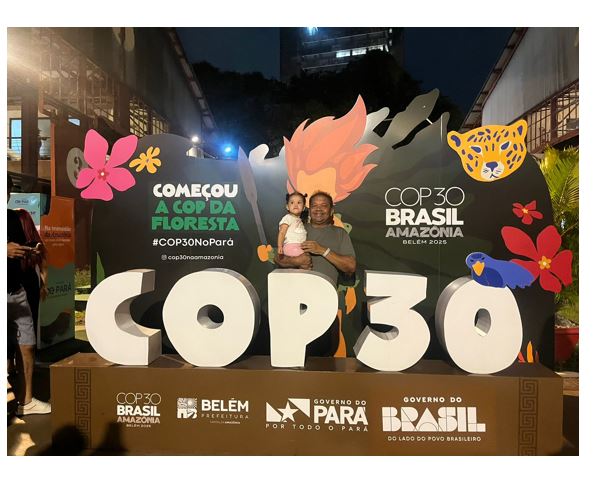
After registering and obtaining my Badge, my first activity was to visit Party and Non-Party Pavilions. I then went on to attend side-events, high level events, and plenaries.
a. Indonesian Pavilion

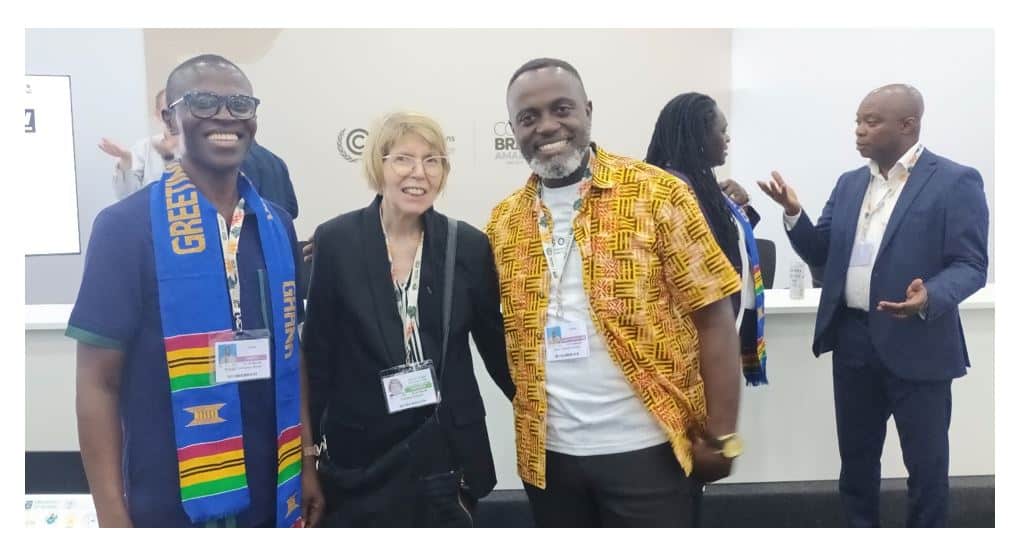
b. United Nations Climate Change Space – with Professor Graydon and COP attendees.
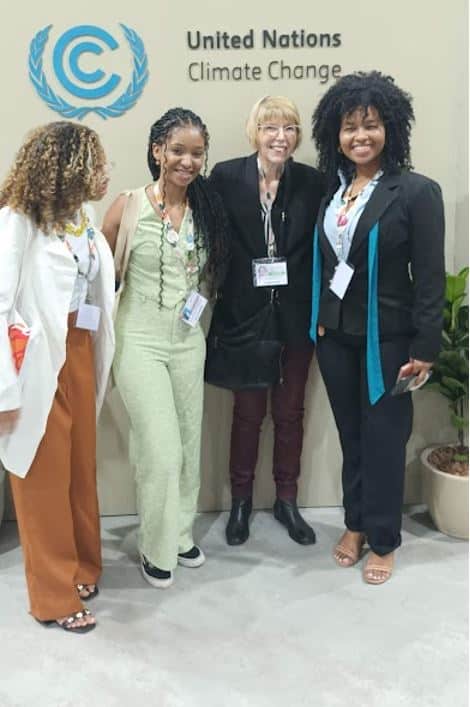
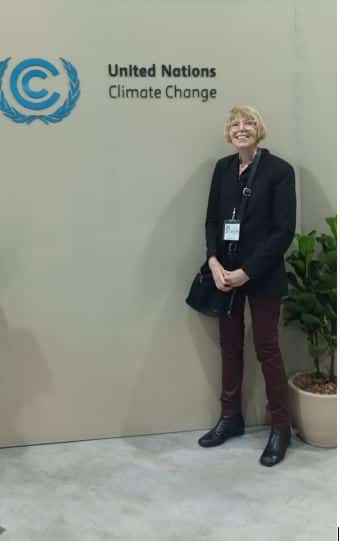
c. United Nations Climate Change – Euclid IGO Lead
2. Approach
This report will provide a photo summary of a selection of my activities at COP3O. It provides brief comments about COP 30 negotiations and results. Comprehensive reports have been provided by outlets and journals, such as the World Resources Institute, entitled: Beyond the Headlines: COP30’s Outcomes and Disappointments. [1]
COP 30 NGO Activities included a broad array of topics. For example, I enjoyed a panel discussion on the topic of Global Public-Private Partnerships for Innovation. Speakers shared ideas on climate change and collaboration for climate change innovations.

3. The Euclid University Presence at COP30
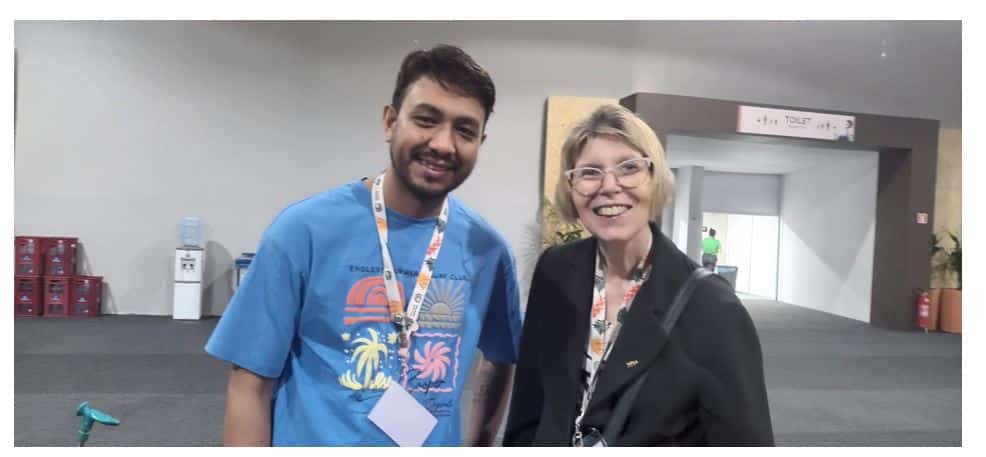
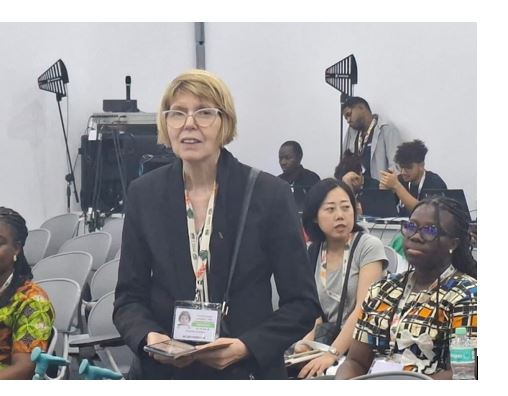
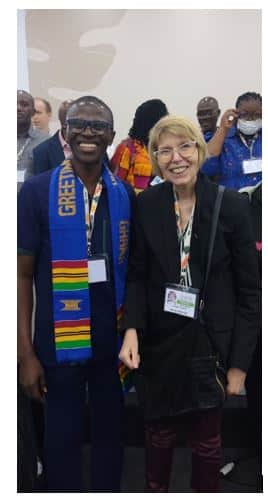
While at COP 30, I had the opportunity to meet and engage with Euclid students. I spoke about Euclid at each of the events I attended and have collected cards from Party and Observer participants, and shared my Euclid cards.
Professor Graydon with Euclid Students
4. COP 30 Deliverables
Reports vary as to what COP30 delivered to the climate change UNFCCC objectives. Headlines suggest that COP30 failed to deliver a roadmap for the phase-out of fossil fuels as agreed at COP28. However, after extending negotiations to November 22, a “Belem package”[1] was arranged, and the President has undertaken to continue work on the roadmap and forestry objectives discussed at COP 30 with a view to continuing the discussion at COP31.
COP 30 has delivered on several fronts. Parties focused on adaptation, setting indicators. They also established a mechanism for a “just transition” and achieved consensus on tripling adaptation finance by 2035. This provided a positive outcome for the COP. As well, when COP30 ended, there had been consensus on several items, referred to as the Belem Package. These agreements include a three-year dialogue to take place under the climate framework. It also included a pledge by seven countries to achieve near-zero methane emissions across the fossil fuels sector. These and additional topics where consensus was reached are found in a report from the UNFCC.[2]
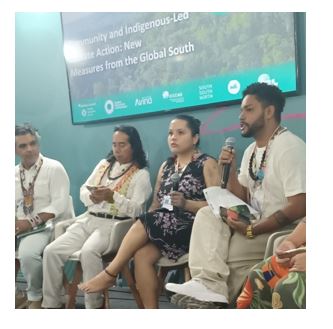
A highlight from COP30 was providing the indigenous communities a place to share their bioeconomic approach and message that climate protection requires people to live in harmony with nature. While there was confrontation during the COP between groups with different agendas, it can be written that the UNFCCC and the Brazilian Presidency opened an important door for future work between parties and indigenous people. Forest care was a topic of major importance, more so than previous COPs I have attended.
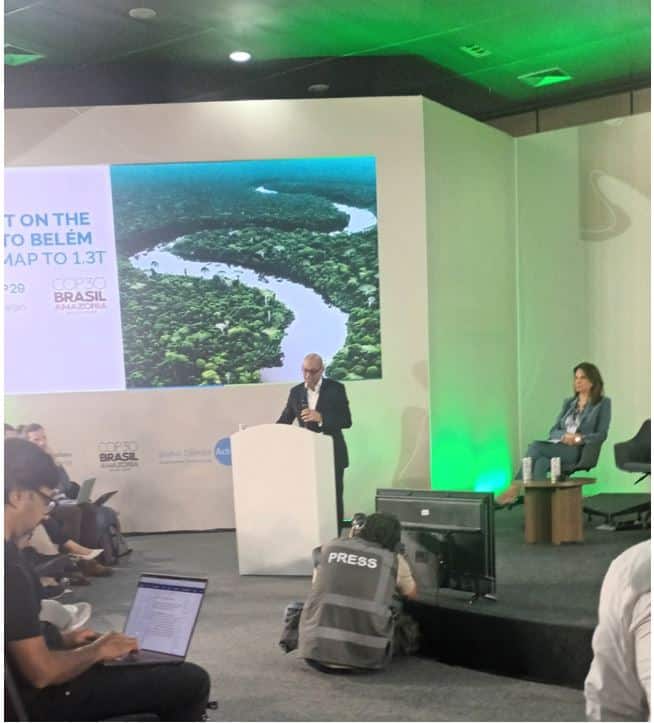
Roadmap from Baku to Belem – High Level Event.
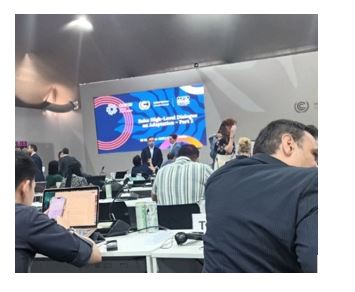
High Level Dialogue
Net Zero Awards

Community and Indigenous Led Climate Action from the Global South
Side Event hosted by Euclid Student – Samuel Dotse
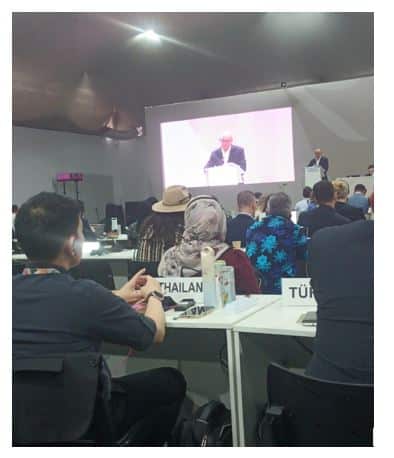
Plenary – Country Speakers on Adaptation Plans
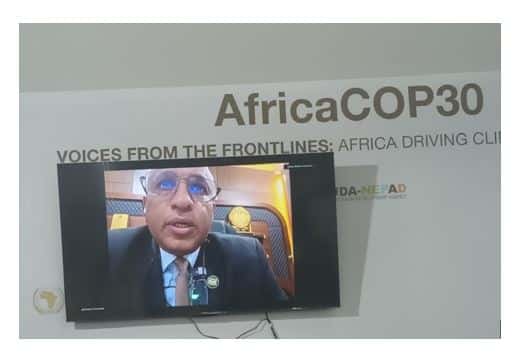
Africa From the Frontlines
Higher Education -Side Event

5. Conclusion
The Brazilian country hosted a well-organized COP 30 with the UNFCCC. The conference space was large, and COP events were numerous, meaning I could only attend select events. For this, I followed the notices sent to me of high-level events and plenaries.
Although I believed the International Court of Justice’s Advisory Opinion,[1] would be a guide to shape Party and non-party positions at COP30, I heard little about the ICJ’s opinion at events I attended. One would have thought the high-profile events on adaptation would have referenced the opinion. Similarly, presentations on implementation, a message highlighted at COP30, and working toward the ICJ objectives, the COP adopted a more practical approach.
For COP 30 as a whole, the Brazilian Presidency, and the country’s President, worked to make COP30 open and accessible to everyone. This was the intention: to make COP30 a COP focusing on implementation and to be people centered.
[1] Https://Irpj.Euclid.Int/Articles/Opinion-International-Court-of-Justice-Advisory-Opinion-on-Climate-Change-Setting-Legal-Standards-for-States/, n.d.
[2] Https://Cop30.Br/En/News-about-Cop30/Cop30-Approves-Belem-Package1 (n.d.).
[3] ‘UN Climate Change Conference – Belém, November 2025 | UNFCCC’, accessed 27 November 2025, https://unfccc.int/cop30.
Bibliography
Beyond the Headlines: COP30’s Outcomes and Disappointments November 25, 2025, By David Waskow, Miriam Garcia, Jamal Srouji, Gabrielle Swaby, Gaia Larsen, Nathan Cogswell, Natalia Alayza, Mariana Oliveira, Melanie Robinson, Charles (Chip) Barber, Mirela Sandrini and Karen Silverwood-Cope Cover Image by: UNclimatechange/Flickr Commentary Topic Climate Social Email Print More on COP30 The 2025 UN Climate Talks Wrapped on Saturday, Nov. 22 after Negotiations Pushed into Overtime. The Resulting Decision Secured Some Important Wins, Both inside and Outside the Negotiations. But It Omitted Some of the Big-Ticket Items Many Hoped to See. With Efforts to Halt Temperature Rise Severely off Track and Climate Disasters Becoming Ever-More Destructive, the Summit (COP30) Aimed to Establish Clear Pathways to Deliver Past Pledges and Put the World on a Safer Track. A Key Question Was How Countries Would Address Lagging Ambition in Their New Climate Commitments (NDCs). Hopes That Countries Would Commit to Roadmaps to End Fossil Fuel Use and Halt Deforestation Were Ultimately Dashed after Opposition from Petrostates. The Final Decision Only Included New Voluntary Initiatives to Accelerate National Climate Action, Though the Brazilian Presidency Intends to Move Forward with Fossil Fuel and Deforestation Roadmaps Outside of the Formal COP Talks. Other Areas Were Brighter. Building Resilience to Climate Impacts Took Center Stage, with COP30 Securing a New Target to Triple Finance for Climate Adaptation. The COP Also Laid out Practical Solutions to Increase Finance for the Low-Carbon Transition. In an Era of Trade Wars and Tariffs, Negotiators Also Agreed for the First Time to Hold Discussions on How Trade Policies Can Help — or Hinder — Climate Action. Against the Backdrop of the Amazon, Nature Also Saw Advances, Including a New Fund for Tropical Forest Conservation. Indigenous Peoples and Other Local Communities Were Recognized like Never before. And Outside the Formal Negotiations, the Summit Saw a Raft of New Pledges and Action Plans from Cities, States, Countries and the Private Sector. It Is Clear That We Are Moving from Negotiations to Implementation, and from Wrangling over What to Do to How to Do It. These Victories Matter. It Shows That International Cooperation Can Still Deliver, despite Deepening Divides on Climate Action and a Difficult Geopolitical Context. Here, We Take a Closer Look at the Outcomes from COP30 and What’s Needed next: National Climate Plans Adaptation Finance Nature People-Centered Action Trade Sectoral Action Responding to the NDC Shortfall By the End of COP30, 119 Countries Representing 74% of Global Emissions Had Submitted New National Commitments in NDCs. These Commitments Showed Some Progress on Reducing Emissions and Mobilizing Sectoral Action, but They Collectively Deliver Less than 15% of the Emissions Reductions Required by 2035 to Hold Global Temperature Rise to 1.5 Degrees C. UN Analysis Finds That Even with the Latest NDCs and Current Policies, the World Remains on Course for 2.3-2.8 Degrees C of Warming, a Dangerous Prospect That’s Well above the Paris Agreement’s Temperature Benchmarks. This Emissions Gap Shaped Expectations Heading into COP30, with Countries Seeking a Credible Response to the NDC Shortfall. A Central and Politically Charged Issue Was How the World Would Address the Continued Use of Fossil Fuels, the Root Cause of the Climate Crisis. More than 80 Countries Advocated for a Global Roadmap to Guide This Transition, but Negotiators Ultimately Failed to Include It in the Final Decision, Stymied by Opposition from Several Countries — in Particular, Major Petrostates. Instead, COP30 Launched Two New Initiatives, under the Guidance of the COP Presidencies: A Global Implementation Accelerator and the “Belem Mission to 1.5” to Enhance and Speed the Implementation of Countries’ NDCs and National Adaptation Plans (NAPs) and Keep 1.5 Degrees C within Reach. Neither of These Voluntary Initiatives Directly Mention Fossil Fuels, Disappointing Countries Seeking Clearer Direction. However, the Language for the Accelerator Does Include a Thin Thread Linking It to the Global Stocktake Commitments Made at COP28 in Dubai, Thus Implicitly Referring to the Language Adopted There on a Just, Orderly Transition Away from Fossil Fuels. The Brazilian COP30 President Also Announced That It Will Develop Roadmaps to Transition Away from Fossil Fuels and Tackle Deforestation in Its Own Capacity. It’s Ultimately up to Brazil President Lula Da Silva and the COP Presidency to Advance These Global Plans in a Robust and Inclusive Way. For the First Time in a COP Decision, Negotiators Also Acknowledged the Likelihood of Overshooting 1.5 Degrees C and the Need to Limit Both Its Magnitude and Duration. Finally, Although Many Countries Now Have 2030, 2035 and Net-Zero Emissions Targets, COP30 Gave Little Attention to Updating Long-Term Emissions Strategies — Essential Complements to near-Term Emissions Targets. Looking Ahead to next Year, the Global Implementation Accelerator Will Hold Open Information Sessions in June and November before Delivering a Report and High-Level Meeting at COP31 in November 2026. The Belém Mission to 1.5 Will Follow a Similar Timeline and Likewise Report Its Conclusions at COP31. In Parallel, the COP30 Presidency’s Roadmap Development Will Be Informed by External Consultations, Including an April Meeting on Transitioning Away from Fossil Fuels, Co-Hosted by the Colombian and Dutch Governments. Adapting to Climate Impacts A Key Task for Negotiators Was Finalizing How the Paris Agreement’s Global Goal on Adaptation (GGA) Will Be Put into Action, Including Establishing Indicators to Track Progress. In the End, Negotiators Adopted a Set of 59 Indicators across Seven Sectors, Such as Water, Agriculture and Health, and the Adaptation Policy Planning Process, Including on Finance, Capacity Building and Technology Transfer. The List Also Takes into Account Cross-Cutting Considerations Such as Gender and Human Rights. But It Was a Bumpy Process and an Ultimately Mixed Outcome. In the Final Days of COP, Many Negotiators Were Surprised to See Most of the Indicators — Developed by 78 Independent Experts over the Course of the Last Two Years — Were Altered. The Final Set Includes Some Indicators That Are Unmeasurable and Thematically Incomplete, Creating Technical Issues to Work through. In the Final Plenary, Some Countries Raised Objections to the GGA Outcome, Which, after Some Controversy over Process, the COP Presidency Promised to Address at the Bonn Climate Talks in June 2026. The GGA Indicators Will Need Further Refinement, Part of Which Will Be Addressed through a Two-Year “Belém-Addis Vision” Process. However, It’s Unclear If Countries Will Be Willing to Start Using the Indicators Agreed at COP30 If They May Change in the next Two Years. Meanwhile, Loss and Damage, Which Addresses the Most Severe Impacts of Climate Change, Received Relatively Little Attention Compared to Previous COPs. Negotiators Did Review the Warsaw International Mechanism and Made Some Progress, Including Kickstarting a New State of Loss and Damage Report, Developing Guidance to Integrate Loss and Damage into National Plans, and Enhancing Coherence within the Paris Agreement’s Loss and Damage Architecture. Parties Also Agreed on New Guidance for the Fund for Responding to Loss and Damage (FRLD), Linking It to the New Climate-Finance Goal Agreed at COP29. The FRLD Launched the Call for Funding Requests for Its Start-up Phase, the Barbados Implementation Modalities (BIM). Farmers Harvesting Crops. Farmers in Cambodia Bring in the Harvest. Vulnerable Communities around the Globe Urgently Need Support to Adapt to Worsening Climate Change Impacts. Photo by Chor Sokunthea/World Bank/Flickr Finance for Developing Countries Expectations Were High for Countries to Determine What’s next for Adaptation Finance, given That the 2021 Glasgow COP Pledge to Double Adaptation Finance from 2019 Levels Expires This Year. Parties Were Divided on Whether to Establish a New Adaptation Finance Target, How Big It Should Be and over What Timeframe, with Many Developing Countries Calling for a Tripling by 2030. The COP Concluded with a Call to at Least Triple Finance for Adaptation by 2035, a Welcome Development, Albeit on a Longer Timeline than Many Had Hoped. This Means That of the $300 Billion+ in Climate Finance That Should Flow to Developing Countries by 2035, $120 Billion or so Should Go toward Adapting and Building Resilience to Climate Change Impacts. COP30 Also Brought Further Dialogue on How to Scale up Finance from All Sources to Reach the Broader Target of $1.3 Trillion for Developing Countries by 2035. The COP29 and COP30 Presidencies Presented the Baku to Belem Roadmap to 1.3T, Laying out Key Actions Governments, Financial Institutions and Others Can Take to Finance Climate Mitigation and Adaptation in Developing Countries. This Is an Important Step-Change in the Approach to Finance. It Recognizes the Importance of All Sources Playing Their Part and the Value of Finance Working Better Together as a System, Including through ‘Country Platforms.’ Negotiators Took Note of the Roadmap and Decided to Urgently Advance Actions Listed within It. However, They Did Not Discuss Its Recommendations in Detail, Which, for Example, Include Actions to Reduce Debt and Improve Incentives for Private Sector Investments in Developing Nations. Some Negotiators Threatened to Hold up the Negotiations Unless Article 9.1 of the Paris Agreement Was Discussed. This Article Spells out the Responsibility of Developed Countries to Provide Finance for Developing Nations. Countries Eventually Agreed to a Two-Year Work Programme to Continue Discussions. They Also Created a Dialogue for Continued Conversation on Article 2.1(c), Which Calls for Alignment of All Global Financial Flows with Mitigation and Adaptation Goals. Ultimately, Financial Decisions Are Made in Many Venues and Institutions across the Globe, from Multilateral Development Banks to the G20, Which Met Last Weekend. Decision-Makers Must Work Together to Direct Finance toward Solutions for Global People, Nature and Climate Goals, and Away from Activities That Undermine Them. The Baku to Belem Roadmap and the Circle of Ministers Reports Provide a Useful Guide for This. Protecting and Restoring Nature Despite COP30’s Location in Belem, the Gateway to the Amazon Rainforest, Negotiators Ultimately Failed to Launch a Global Roadmap for Ending Deforestation. Still, COP30 Brought Other Important Wins for Nature Conservation. Brazil Officially Launched Its Tropical Forests Forever Facility to Provide Long-Term, Predictable Finance to Countries That Protect Their Tropical Forests. The Innovative Approach Aims to Shift the Economics of Deforestation so That Maintaining Standing Forests Is More Profitable than Clearing Them. A Handful of Countries — Including Brazil, Indonesia, France, Germany and Norway — Pledged a Total of $6.7 Billion for the Fund. That’s a Start toward Brazil’s Initial Target of $25 Billion, but More Momentum Is Needed. For Example, China and the U.K. Signaled That They May Come through with Funding Pledges next Year. Countries Also Renewed the Forest and Land Tenure Pledge, Committing $1.8 Billion in Funding through 2030 and Expanding Coverage beyond Forests to Savannas, Mangroves and Other Ecosystems. Fifteen Governments Launched the Intergovernmental Land Tenure Commitment, Which Aims to Secure and Formally Recognize 160 Million Hectares of Land Held and Used by Indigenous Peoples and Local Communities. Brazil Announced New Protections for Indigenous Territories, and Indonesia Pledged to Do so. These Outcomes Demonstrate a Major Shift in Recognizing the Role That Indigenous Peoples, Afro-Descendants, and Local Communities Play in Protecting the Ecosystems That Sustain Us All. Countries Also Announced New Efforts to Tackle the Major Challenges Facing Nature. Over 40 Countries Endorsed a Call to Action to Fight Wildfires, the Leading Cause of Forest Loss Last Year. Brazil Launched the Bioeconomy Challenge, a Global Platform to Increase Investment in Sustainable Forest Economy Markets. And 10 Countries Announced Their Support for a Brazil-Led Accelerator to Restore the World’s Degraded and Underproductive Farmland. Ocean Conservation Also Advanced. Brazil Joined the Ocean Panel, Committing to Sustainably Manage All of Its National Waters by 2030 — the World’s 10th Largest Ocean Area. And Six More Countries Joined the Blue NDC Challenge to Deliver Ocean-Climate Actions: Belgium, Cambodia, Canada, Indonesia, Portugal and Singapore. A Man near a Canoe and a Home on Stilts in the Amazon Rainforest. The Home of an Indigenous Family in the Amazon Rainforest. The New Tropical Forest Forever Facility Launched at COP30 Aims to Protect Tropical Forests and, in Turn, Those Who Depend on Them. Photo by CYSUN/Shutterstock Putting People at the Heart of Climate Action COP30 Brought a Refreshingly New Focus “to Connect the Climate Regime to People’s Real Lives.” This Theme Ran through the People’s March, Where over 70,000 People Took to the Streets Calling for Climate Justice and Action. The First Global Ethical Stocktake, Launched by President Lula and Minister Marina Silva along with UN Secretary-General António Guterres, with Participation from WRI’s Wanjira Mathai, Reinforced That Fairness, Inclusion and Shared Responsibility Must Guide Climate Decisions and Prioritize Those Most Affected by Climate Change’s Impacts. The Adoption of a Process to Develop a “Just Transition Mechanism” Marked the Furthest a COP Has Gone to Address Workers’ and Communities’ Rights. It Aims to Strengthen International Cooperation, Provide Technical Assistance and Capacity-Building, Share Knowledge, and Support Equitable, Inclusive Transitions to Low-Carbon Economies. While Some Noted Disappointment That It Does Not Include Specific References to Critical Minerals or Fossil Fuels, the Decision to Develop the Mechanism Remains a Significant Step Forward. Negotiators and Other Stakeholders Will Share Their Views on the Process for Developing the Mechanism by March 2026, with a Recommended Process for Its Operationalization to Be Considered in November 2026. The Summit Also Marked an Unprecedented Effort to Include Indigenous Voices. Over 2,500 Indigenous Peoples Participated in COP30, Supported by Initiatives like the Peoples’ Circle, an Advisory Body Highlighting Their Perspectives to the COP Presidency. At Least Three COP Documents Explicitly Recognize Indigenous Rights: The Global Mutirão Affirms Their Land Rights and Traditional Knowledge; the Mitigation Work Program Highlights Their Vital Role in Sustainable Forest Management and Calls for Long-Term Recognition of Their Land Rights; and the Just Transition Mechanism Refers to Rights and Protections for Indigenous Peoples in Voluntary Isolation and Initial Contact. Countries Also Developed a New Gender Action Plan, Setting the Stage for Gender-Responsive Climate Policy. The Initiative Supports Gender-Responsive Finance and Promotes the Leadership of Indigenous, Afro-Descendant and Rural Women. Jobs and Economic Opportunity Were Also Prominent Themes, with a Clear Takeaway That Embracing the Low-Carbon Transition Can Deliver Growth, Investment, Security, Competitiveness and Good-Paying Jobs. Developed in Collaboration with the COP30 Presidency and a Broad Coalition of International Partners, the Global Initiative on Jobs & Skills for the New Economy Was Launched to Prepare Workforces for a Rapidly Evolving Economy and Build a Movement for Green, Inclusive Jobs. Countries Also Launched the Belém Declaration on Global Green Industrialization, Providing a Framework for Scaling New Industrial Systems and Creating Employment Opportunities in Emerging Green Sectors. Health Also Featured Prominently. The World Health Organization Launched the Belém Health Action Plan, Citing 60 Actions Necessary to Both Adapt to Climate Change and Address Climate-Related Health Risks Affecting 3.3 Billion People. Over 30 Countries Endorsed the Plan and Agreed to Report Their Progress during the next Global Stocktake at COP33 in 2028. People in Traditional Indigenous Dress at a Demonstration. People from the Amazon Region’s Munduruku Indigenous Group Staged a Demonstration Outside of COP30. The Summit Saw Stronger Participation from Indigenous Peoples than in Past Years. Photo by UNclimatechange/Flickr Trade Policies Linked to Climate Action COP30 Marked an Important Shift in the Recognition of Trade Policies as Being Closely Interlinked with Climate Action. This Reflects the Degree to Which Climate Action Is Increasingly Seen as Integral to Broader Economic Transformation, and How Economic Systems Can Either Act as Barriers or Catalysts to the Pace, Scale and Distributional Impacts of the Transition. At the Beginning of the COP, Some Developing Countries Pressed for the Formal Agenda to Include Discussion of “Unilateral Trade Measures” Related to Climate Policies. While the Adopted Agenda Never Reflected That Call, the Outcome in the Global Mutirão Decision, the Centerpiece of COP30 Outcomes, Included Dialogues on Trade and Climate. The Outcome Reaffirmed That Countries Should Cooperate to Promote a Supportive and Open International Economic System That Enhances Efforts to Combat Climate Change. To Enable Better Communication and Discussion among Countries on Those Issues, Dialogues Will Be Held over the next Three Years during the UNFCCC Intersessional Meetings in June Each Year. Those Dialogues Will Include Participation from the WTO and Other International Economic Organizations and Will Look at Opportunities and Challenges at the Nexus of Trade and Climate, Culminating in a Report in 2028. Trade Also Featured in the New Integrated Forum on Climate Change and Trade, Introduced by President Lula during the World Leaders’ Summit Held Just before COP30. By Positioning Itself Outside the International Climate and Trade Regimes, the Forum Will Help Develop Mutually Reinforcing Solutions at the Intersection of Climate and Trade Policies, in Areas Such as the Energy Transition, Deforestation and Carbon Accounting. Advancing Action Across Sectors The COP30 Presidency and High-Level Climate Champions Released the COP30 Action Agenda, Which Unites Hundreds of Climate Initiatives across Sectors and Actors into a Common Framework Tied to Negotiated Outcomes, Including the Global Stocktake. By Establishing Channels for Coordination and Collaboration, the Action Agenda Can Reinforce Connections between Government and Non-State Actors to Drive Greater Climate Action. In Addition to Those Mentioned above, a Few Highlights Are Particularly Significant: Cities, States and Regions: COP30 Saw Tremendous Momentum for the Urban Agenda. Over 14,000 Cities, States and Regions Committed to Advance Climate Solutions at the Local Leaders Forum in Rio Ahead of COP30. 77 Countries and the European Union Have Now Committed to Local-National Climate Collaboration through the CHAMP Initiative. And185 Cities Joined the Beat the Heat Initiative to Tackle Extreme Heat. Carbon Accounting: Underpinning All Sectors’ and Companies’ Climate Progress Is Rigorous and Transparent Carbon Accounting. The Action Agenda Reaffirms That the Partnership between Greenhouse Gas Protocol (GHGP) and the International Organization for Standardization (ISO) Is the Foundation of the Global Carbon-Accounting System. Bioeconomy Challenge: Launched by Brazil and Several Partners, the Initiative Aims to Scale Sustainable Nature-Based Investment by 2028 through a Focus on Five Priority Areas: Forests, Regenerative Agriculture and Restoration, Sociobioeconomy, Financing Innovation, and Bio-Industrialization. Energy: South Korea, the Seventh-Largest Coal Producer, Committed to Phase out Coal by 2040. Alongside Bahrain, It Also Joined the Powering Past Coal Alliance. Utilities Stepped up, Too: Members of the Utilities for Net Zero Alliance (UNEZA) Announced They Will Increase Annual Investments in the Energy Transition to Nearly $150 Billion, with a Major Focus on Grids and Storage. And the Global Coalition Mission Efficiency Launched a ‘Plan to Accelerate Doubling Energy Efficiency (PAS),’ a Much-Needed Roadmap Aimed at Achieving the COP28 Goal to Double Energy Efficiency by 2030. By Unifying More than 480 Initiatives into 117 Concrete “Plans to Accelerate Solutions,” the Action Agenda Can Help Turn Pledges into Reality. It Can Also Serve as Critical Support for the New Global Implementation Accelerator. Related Cities Why COP30 Was a Breakthrough for Cities Insights November 25, 2025, Aerial View of a City Boulevard Lined by Skyscrapers. Picking Up the Pace of Change It’s Easy to Be Discouraged by the Negative News Coming out of COP30 and the Climate Space Writ Large. But beneath the Headlines, Progress Is Happening. Clean Energy and Electrified Transport Are Growing at Rates That Were Unimaginable a Decade Ago. Countries Investing in a Green Transition Are Reaping the Benefits, from New Jobs and Growing Economies to Better Energy Access and Cleaner Air. A Big Question Remains Whether the Brazilian Presidency’s Promise to Deliver Fossil Fuel and Deforestation Roadmaps in the next Year Can Bear Fruit and Have Real Impact. It Is in the Interest of Those Who Want to See a Just Transition for It to Do so. Meanwhile, Countries Must Prove They Can Deliver Their New Climate Plans, Leveraging Economy-Wide Policy Shifts and Finance Mobilization to Turn Ambition into Real Action. Whatever the Twists and Turns of Climate Negotiations, the Economic Transition Is Underway. The Question Is, How Fast It Will Be and Who Will Benefit? Now Is the Time for All Actors to Pick up the Pace and Drive towards a Just Transition. n.d.
Climate Urgency Means Bypassing COP Is Necessary, Says COP30 Boss. n.d.
‘COP30 Unpacked’. Accessed 27 November 2025. https://engage.wri.org/-/m/view-online?k=F3dvcmxkcmVzb3VyY2VzaW5zdGl0dXRlAGXfeImjmWPbTV4CEGknVpAyRkV-LLe2tBEH5g&rg=eu.
Https://Cop30.Br/En/News-about-Cop30/Cop30-Approves-Belem-Package1. n.d.
Https://Engage.Wri.Org/-/m/View-Online?k=F3dvcmxkcmVzb3VyY2VzaW5zdGl0dXRlAGXfeImjmWPbTV4CEGknVpAyRkV-LLe2tBEH5g&rg=eu. n.d.
Https://Irpj.Euclid.Int/Articles/Opinion-International-Court-of-Justice-Advisory-Opinion-on-Climate-Change-Setting-Legal-Standards-for-States/. n.d.
Https://Macchub.Co.Uk/Knowledge-Base/Governance-Institutions-and-Policy/Cop30-Unpacked-Why-and-How-Belem-Could-Be-a-Turning-Point-for-Adaptation/. n.d.
Https://Mail.Google.Com/Mail/u/0/?Tab=rm&ogbl#inbox/FMfcgzQcqtlTMCPNxzPHrnXTKtQWZgjt. n.d.
Https://News.Un.Org/En/Story/2025/11/1166433. n.d.
Https://Theconversation.Com/Why-Hosting-the-Un-Climate-Summit-in-the-Amazon-Was-so-Important-despite-the-Disappointing-Outcome-269841. n.d.
Https://Unfccc.Int/Cop30/Belem-Political-Package. n.d.
Https://Unfccc.Int/Process/Bodies/Supreme-Bodies/Conference-of-the-Parties-Cop. n.d.
Https://Www.Diplomatie.Gouv.Fr/En/French-Foreign-Policy/Climate-and-Environment/the-Fight-against-Climate-Change/Cop30-Climate-a-New-Direction-for-Global-Climate-Action/Article/Cop30-Climate-a-New-Direction-for-Global-Climate-Action. n.d.
Https://Www.Eesc.Europa.Eu/En/News-Media/News/Ambition-Deferred-Cop30-Keeps-Paris-Alive-Fails-Deliver-Fossil-Fuel-Phase-out-World-Needs#:~:text=The%20summit%20closed%20without%20an,Outcome%20has%20sparked%20divided%20assessments. n.d.
Https://Www.Erm.Com/Insights/Five-Business-Takeaways-from-Cop30/. n.d.
Https://Www.Ft.Com/Content/E0d617b5-1728-4d7d-B8ff-Ef5b79f9bbdc. n.d.
‘Https://Www.Linkedin.Com/Posts/Oxford-Climate-Alumni-Network_cop30-Cop30-Climatechangeconference-Activity-7399209935101698048-2BFj?utm_source=social_share_send&utm_medium=android_app&rcm=ACoAAA-8DUoBe3xXPY6hPjCgCMKnod3RVECalB8&utm_campaign=share_via’. Preprint, n.d.
Https://Www.Who.Int/News/Item/14-11-2025-Who-and-Brazil-Urge-Swift-Action-on-Bel-m-Health-Action-Plan-at-Cop30. n.d.
‘Outcomes Report of the Global Climate Action Agenda at COP 30 | UNFCCC’. Accessed 27 November 2025. https://unfccc.int/documents/655037.
‘The Direction of Travel Improving Every Year, But We Need to Urgently Pick up the Pace: UN Climate Change Executive Secretary on 2025 Nationally Determined Contributions Synthesis Report | UNFCCC’. Accessed 27 November 2025. https://unfccc.int/news/the-direction-of-travel-improving-every-year-but-we-need-to-urgently-pick-up-the-pace-un-climate.
‘UN Climate Change Conference – Belém, November 2025 | UNFCCC’. Accessed 27 November 2025. https://unfccc.int/cop30.
‘Update to NDC Synthesis Report Shows the Emissions Curve Is Being Bent Downwards – but Urgent Acceleration Still Needed | UNFCCC’. Accessed 27 November 2025. https://unfccc.int/news/update-to-ndc-synthesis-report-shows-the-emissions-curve-is-being-bent-downwards-but-urgent.
What COP30 Delivered 1. Strong Renewed Focus on Adaptation and Resilience The Summit Agreed to Triple Adaptation Finance by 2035 — a Recognition of the Growing Climate Impacts Communities Are Already Facing. RMetS +2 GreentechLead +2 A Set of 59 Indicators for the Global Goal on Adaptation (GGA) Was Adopted, Giving Countries Clearer Tools to Measure and Plan Adaptation Progress. RMetS +1 New Commitments Were Made to Support Climate-Resilient Health Systems via the Belém Health Action Plan — with a Focus on Health Equity, Climate Justice, and Inclusive Governance. World Health Organization +1 2. Inclusion of “Just Transition” and Social Justice in Climate Planning COP30 Formally Adopted a Mechanism for a “Just Transition,” Embedding Labour Rights, Human Rights and Inclusion of Marginalized Groups into the Climate Transition Process. RMetS +1 The Summit Linked Climate Action with Social and Economic Equity — a Recognition That Climate Policies Must Also Consider Justice, Fairness, and Protecting Vulnerable Communities. COP30 Brasil +1 3. Broader Scope — beyond Emissions: Trade, Buildings, Food Systems, Digital Tools For the First Time, Trade-Related Climate Measures (e.g. Unilateral Trade Measures) Entered the COP Agenda, and a Plan Was Launched for Annual Trade-Climate Dialogues (2026–2028). RMetS +1 COP30 Pushed Forward on Sustainable Buildings, Endorsing the Belém Call for Action for Sustainable and Affordable Housing — Encouraging Low-Carbon and Climate-Resilient Housing, Especially in Vulnerable Communities. COP30 Brasil +1 Innovation in Agriculture, Climate-Resilient Food Systems, and Digital/AI-Enabled Climate-Tech Solutions Got Spotlight — Signaling a Shift toward Systemic and Cross-Sector Climate Strategies. COP30 Brasil +2 COP30 Brasil +2 ⚠️ What COP30 Failed to Deliver (or Only Partially Delivered) 4. No Concrete Roadmap to Phase out Fossil Fuels or Halt Deforestation Despite Widespread Calls, the Final Agreement Did Not Include a Binding Roadmap to Eliminate Fossil Fuel Production/Use Globally — a Major Disappointment for Many Climate-Justice Advocates. France Diplomacy +2 RMetS +2 Similarly, a Formal Global Roadmap to End Deforestation by 2030 Was Dropped. While Some Forest-Protection and Finance Initiatives Were Launched, Critics Noted the Lack of Strong Commitments for Forest Conservation. France Diplomacy +2 The Economic Times +2 5. Finance Commitments Remain Vague, Uncertain, and Uneven The Call to Triple Adaptation Finance by 2035 Lacks a Clear Baseline, and the Timeline Is Long — Meaning near-Term Support for Vulnerable Countries Remains Uncertain. RMetS +1 Similarly, Pledges toward Mitigation, Fossil-Fuel Transition, and Deforestation Prevention Were Weak or Absent — Exposing a Growing Gap between Ambition (in Rhetoric) and Concrete Delivery. France Diplomacy +2 COP30 Brasil +2 As a Result, Many Climate-Vulnerable Countries and Civil-Society Groups Left COP30 Frustrated, Saying the Summit Failed to Live up to Its “People’s Summit” Promise. The New Humanitarian +2 University College London +2 🧭 What It Means Going Forward COP30 Signals That the World Is Gradually Moving from Planning to Implementation — Focusing More on Adaptation, Social Justice, Cross-Sector Climate Solutions (Buildings, Agriculture, Health), and Broader Sustainability than Only Emissions Reductions. But the Lack of a Fossil-Fuel Phase-out Roadmap and Weak Deforestation Commitments Underscore That Politics, Economic Interests, and Global Inequalities Remain Major Obstacles. The Emphasis on a “Just Transition” and on Equity — Workers’, Marginalized Communities’, Indigenous Peoples’ Rights — May Shape Future Climate Diplomacy, Pressuring Governments to Integrate Climate Action with Social Justice. The Widening Gap between Finance Pledges and Delivery Remains a Serious Concern: Without Concrete Funding and Accountability, Many Vulnerable Regions Risk Being Left behind — Putting at Risk the Very Goals of Global Equity and Climate Resilience That COP30 Tried to Promote. n.d.